Home

Monday, March 14, 2011

A Garden of Tranquility - Kukenhoff, Lisse, Netherland


It’s spring and we are here for Kukenhoff! We flew from London to Schiphol Airport, Amsterdam. Stored our bags in the airport’s locker and took a direct bus (No. 58) to Lisse, the home of Kukenhoff. We purchased the combi ticket for 19 Euro, which included the entrance fee to Kukenhoff. The bus leaves every 15 minutes and the journey takes about 40 minutes. I have done the group bus tour before but doing it on your own with public transportation is the best. You get to stay in the garden as long as you want.

Here are some photography tips when you are in Kukenhoff:
  • You don’t have to be a professional photographer
  • Crawl into the flowers to get your best shot
  • Bend through your knees and shoot
  • Remember every angle in Kukenhoff is a perfect angle


Some facts about Kukenhoff:
  • The park opened since 1949
  • Since 1949, more than 44million people have visited Kukenhoff
  • This 70 acres parkland is the world’s largest flower garden 
  • It contains more than 7 million bulbs planted by hand

Wednesday, March 9, 2011

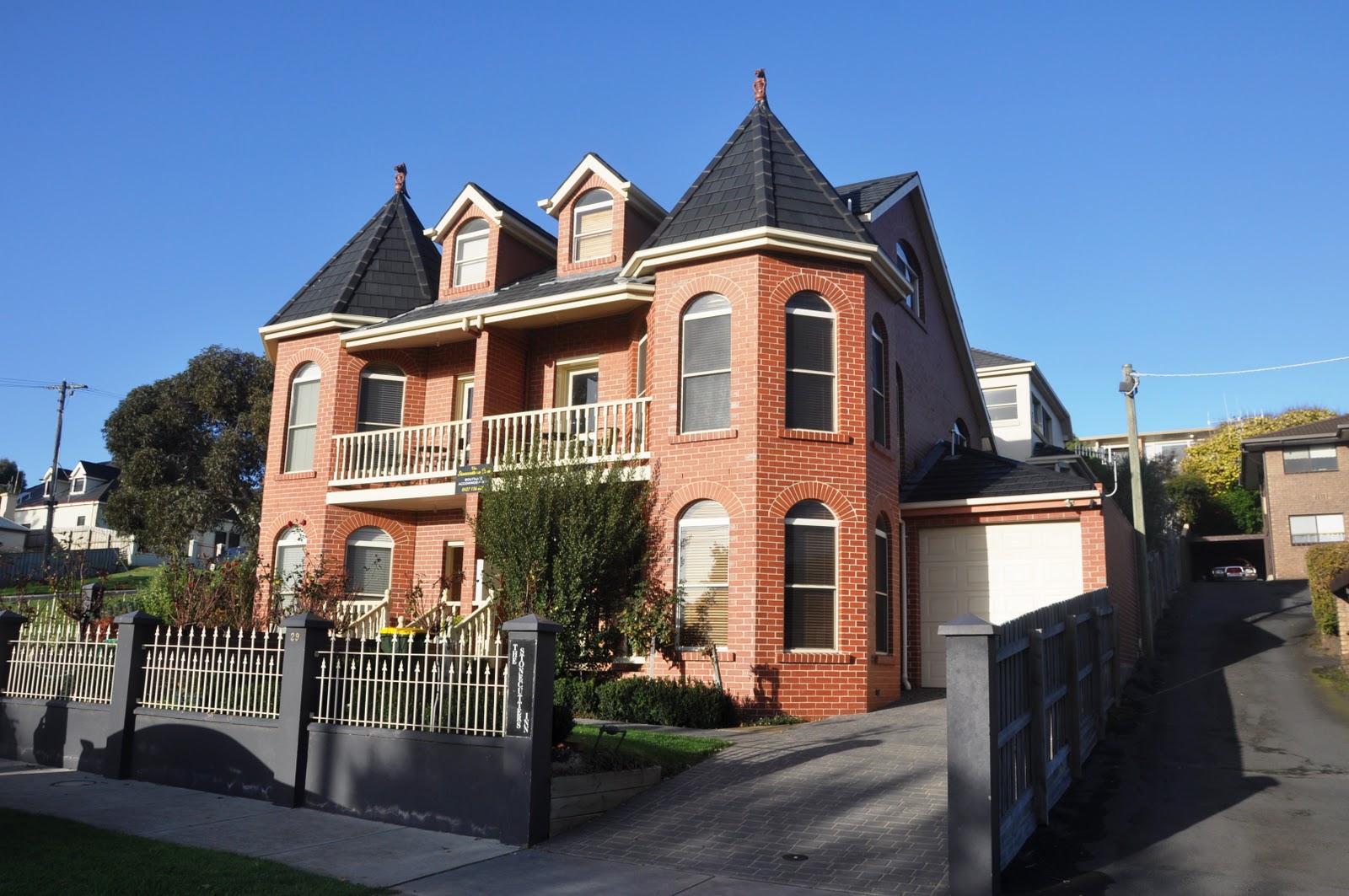
Stonecutter Inn - Warrnambool, Australia

I love the mural on the bathroom wall
The Stonecutter Inn is a beautiful and comfortable self catering accommodation to stay in Warrnambool. We took the spacious three bedrooms apartment for 2 nights. There are two bedrooms that sleeps 5 people upstairs and a double bedroom down stairs. Upon arrival, we were greeted by the cheerful owner, Gary (Oh My Gosh McCosh as he called himself) who showed us around the house. Gary was very welcoming and so was his affable wife.
Stonecutter Inn 


Warrnambool is a small town and Stonecutter Inn is located in a quiet neighbourhood not far from the town centre. The apartment is very unique and impressive, both the interior and exterior. Interestingly, Gary himself took the painstaking job of refurbishing the place with recycled materials from several places in Warrnambool, even from the graveyard! And that scares us Gary! Every corner of the apartment has a story as we listened attentively how Gary built this house. Gary and his wife live just on the street opposite Stonecutter Inn and one fine afternoon, we dropped by his house to meet his friendly wife and their parrots.

I love the finishing and interior of this apartment and would definitely return if I come to Warrnambool again. It feels like home and being there in winter we spent more time in the house cooking and eating.


The black wrought iron came from the cemetery in Warrnambool :)
And this one too!
Another beautiful mural
One of the bedroom upstairs
The dining area
Gary's painting
Old Warrnambool newspaper
                                                        

Great Ocean Drive


Australia is pretty easy to navigate and that makes driving enjoyable and less stressful for amateurs like me. Outside the cities, roads are not congested and drivers are well disciplined. Watch your speed limit even when you find the road is empty because the sheriff could suddenly appear from the bushes.

It was a breathtaking 4-5 hours drive (you could do less) from Melbourne to Warrnambool.  The winding Great Ocean Road is one of the spectacular coastlines in the world. Thanks to the Australian World War I veterans who skillfully cut through the coastal mountains to build the road between 1919 and 1932 and hence making the area accessible. The viewpoints are well signposted and we made several stops for the scenic views. Of course...the Twelve Apostles is the highlight of the region but as a  fan of nature I found all the rock formations in the area amazing. London Bridge, Loch Ard Gorge, The Grotto are equally fascinating. The waves were putting quiet a show on that day, crashing into the rocks.

Port Campbell National Park

Waves crashing the coastline

Down to The Grotto

The Grotto

The split London Bridge

The erosion form the natural arch

The waves


Monday, February 28, 2011

Cameron Highlands, Pahang, Malaysia

Tea House with superb view of the plantation area
Cameron Highlands is in the state of Pahang, Malaysia and it is a famous hill resort in the country. Located about 1,500 meters above sea level, the temperature up here is very cooling and refreshing. The colonial British used this place as a retreat from the hot and humid cities. The highland must have gotten its name from William Cameron who discovered the place in 1885.

There are two ways to get up the hills; one via the old road Tapah and the other is the new highway at Simpang Pulai, Ipoh. The latter route is much gentler and less winding while the old Tapah route tend to be winding with sharp bends and corners. Cameron Highlands is dotted with interesting small towns of Ringlet,Tanah Rata, Brinchang, Tringkap and Kampung Raja. Abundance of fresh vegetable are available at the night market and day stalls in Brinchang.

The vast Boh Plantation in Sungai Palas is an interesting place to visit and its perching cafe on the hill top is a nice stop for a cup of tea. The view from the cafe is breathtaking and the rolling green hills are soothing for the eyes.

Rolling green hills covered with tea plants
Beautiful view of the plantation
The plantation workers houses
Plucking tea leaves


Plantation workers at work
Loading and transporting tea leaves
The backyard of the worker's house
Interesting packaging of Boh tea
Cameron has sweet juicy oranges
Purple cabbage at the market
White Raddish
Fresh cabbage

Saturday, February 12, 2011

Sungai Klah Hot Spring - Sungkai

Hot spring in the bungalow we rented
Sungai Klah Hot Spring owned by FELDA is nestled in the Sungkai palm plantation about 140km north of Kuala Lumpur. It is becoming a popular tourist destination for the locals and foreigners these days due to it accessibility and availability of hotels and self catering bungalows. The bungalows are equipped with private hot spring Jacuzzi resembling a mini pool in the center of the house. Hot springs are known for its therapeutic healing effects on several ailments such as rheumatism, arthritis, stress related problem and others. 

If you are planning just for a day trip to Sungai Klah hot spring, a huge natural hot and cold pool is available for public. Still if you prefer a private pool, you should book in advance for few hours. The 6.5 hectares scenic park is surrounded by the lush green forest of Titiwangsa range and oil palm plantation.


Entrance Fee: RM 10 (Adults), RM 8 (Children)
http://www.plantationresorts.com.my/HotSprings

Restaurant and cafe near the bungalows
Take a healthy morning stroll on the boardwalk
The steamy boardwalk
Hot spring stream 
The steamy stream

Egg boiling activity is fun but children must be observed closely
The visitors having fun boiling their eggs
This private SPA is available for hourly rental
The SPA from exterior
The private hot spring SPA
The SPA garden

Thursday, February 10, 2011

Preparing for your Journey


The whole joy of traveling actually begins with the preparation of the journey itself. Here are some tips that may help:
  • Research- Prepare months ahead of your journey with reading and researching about the place. Knowledge is power, the more you know the better it will be. It is an effective way to minimize your risks when traveling.
  • Visa- Check if you need visa and apply for it as soon as you get all the documents ready. Do not make any assumption, check with the countries’ embassies for latest information. Who knows, your country may have fought with the country you are visiting and visa free visits have been withdrawn :)
  • Passport – Check your passport and be sure that you have more than 6 months on the last day of your journey. Most countries require that your passport has at least 6 months validity from the expiry date.
  • Documents – I scan my passport and all important documents. The original documents are in my hand luggage and a set of photocopies in my checked-in luggage. I leave one set with my family at home and I have back up copies in my emails. I have a small note book that contained important address and telephone numbers of my country’s embassies, local bank, insurance company, credit card office, hotels, airline, airport and other contacts. Even if I have all these information on my mobile, a traditional note book is still worth it as back up.
  • Itinerary – From experience there is always a ‘pop quiz’ at the immigration counter.  To speed up the process, I carry with me my itinerary, return flight ticket and other documents to present it to the immigration officer.
  • Communication – There are several modes of communication to keep in touch with family and friends at home. Buying the SIM card of the country you are visiting is much cheaper than using your home country’s SIM card. Get registered with SKYPE and that can be a huge saving on phone bills.
  • Vaccination – Check with your doctor and the official country’s website if you are required to have certain vaccination upon entering the country. 
  • Medication – Always carry your own medication. Everything you need for fever, cough, diarrhea, constipation and other regular medication you are taking. I always carry with me heat rub, knee guard and ankle guard. They are essential when I do hiking and lots of walking
  • International Driving License – Even if you don’t plan to drive, at least one of you (if traveling in a group) must carry a valid international driving license. Although most countries do accept visitor’s home country license, it is their prerogative to ask for international license or a translated version of your license (in the case of Malaysian license).
  • Travel Insurance – This is very important and don’t rest your case on fate! In some countries the medical expenses can be so exorbitant that it will dig deep into your pocket. In cases where you will be doing risky activities do check if you can be covered for related injuries. You may end up not using the insurance but you are doing yourself a great favor if something happened. 
  • Packing – Pack smart and light. I always see people repacking their luggage at airport as instructed by the airlines counter staff because of excess baggage. Check your weight limit and never exceed in order to travel with a peace of mind. I usually bring old clothes that I want to dispose :) Think of all your disposable items; carry, disposed and probably replaced with some new ones along the way. Bring some simple food like biscuits and sachet of coffee or chocolate drinks just in case you arrived late in a city or town.
  • Currency – Carry some USD/ Euros/ GBP. These currencies are acceptable almost everywhere. Some countries’ currencies are not traded outside the country -be prudent when changing them. In Morocco and Turkey, I changed my Euro and GBP in small quantities and replenished when needed. The Moroccan Dinar and Turkish Lira for example are not traded outside the country so you wouldn’t want to end up having ample stock just before leaving the country. Even the duty free shops in Moroccan airport do not accept Moroccan Dinars.
  • Banks- Previously I would notify my bank that I’m not in the country to allow me to do foreign transactions. These days I could just do it at the ATM machine and key-in the period I’ll be outside the country to enable foreign transaction. This is a procedure that ensures security but each country may have different procedures. You need to check with your bank. Remember in some countries, credit card doesn't help.
  • Camera – A quality camera is essential. It is an investment that you will never regret. Carry enough batteries (even if they are rechargeable), memory card, USB, cleaning kit and others necessary gadgets. On my desert trekking in Morocco, a huge ziplock is important to protect my camera from the fine sand and dust in the desert.
  • Lap Top – It all depends on your preference. My trips are usually no longer than 15 days, so it is much convenient to use the cybercafés. Anyway in remote areas and deserts, the temporary detachment from modern gadgets can be a rewarding experience of life in solitude :) Try it!